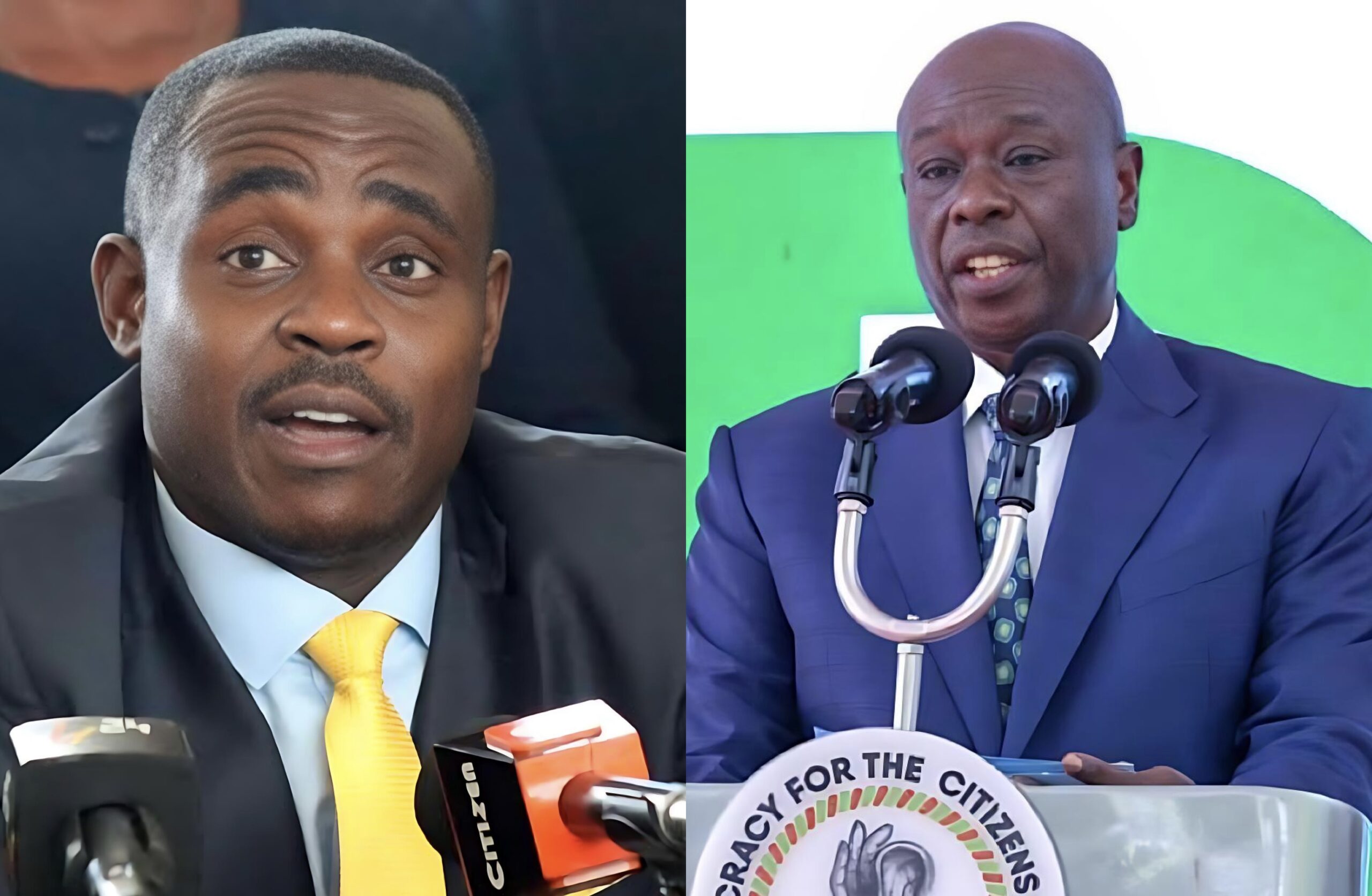
Political speculation has intensified within the opposition’s Democracy for the Citizens Party (DCP) following the noticeable absence of Deputy Party Leader Cleophas Malala from several high-profile party events led by party leader Rigathi Gachagua.
For weeks, political observers and supporters have questioned why Malala, one of the party’s most recognizable national figures outside the Mt. Kenya region, has been missing from major press briefings, strategy meetings, and public engagements where senior DCP officials have appeared.
The speculation gained momentum as Nyandarua Senator John Methu increasingly emerged as the party’s chief public spokesperson following his appointment as Secretary-General. The shift in visibility prompted discussions within political circles about whether Malala’s influence inside the party had diminished.
Observers noted that DCP was initially unveiled as a national political movement seeking support from various regions of the country. However, some critics have recently argued that the party risks being perceived as heavily centered on Mt. Kenya politics, a concern that has surfaced in opposition debates ahead of the 2027 General Election.
The rumours were further fueled after Gachagua revealed during a media interview that an ally from Western Kenya had expressed concerns that DCP was becoming overly focused on Mt. Kenya interests. Although he did not identify the individual, political observers quickly linked the remarks to Malala because of his senior position in the party and his reduced public visibility.
As speculation spread across social media and political forums, some reports suggested that tensions could be developing within the party’s top leadership. Others questioned whether internal restructuring within DCP had altered the balance of power among senior officials.
However, both Gachagua and Malala have publicly denied any fallout.
Speaking in Kakamega on June 6, 2026, Malala dismissed reports of a disagreement, describing them as propaganda aimed at weakening the opposition coalition. He maintained that he remains the deputy party leader and insisted that his relationship with Gachagua remains intact.
Gachagua has also sought to dispel the rumours. Earlier in the year, he publicly assigned Malala the responsibility of overseeing implementation of DCP’s 2026 Action Plan, a move widely viewed as a demonstration of confidence in his deputy.
Previous reports had also indicated that some of Malala’s absence from party activities was linked to health-related issues, with Gachagua at one point stating that the former senator was recuperating before returning to active political engagements.
Despite the public denials, questions surrounding Malala’s reduced visibility continue to generate discussion among political observers. With DCP positioning itself as a major opposition force ahead of the 2027 elections, analysts are likely to continue watching the relationship between Gachagua, Malala, and other emerging party leaders for signs of how the party’s internal dynamics evolve.
For now, however, the official position from both leaders remains clear: there is no fallout, and DCP’s leadership insists it remains united despite the rumours.
Related posts:
 Oscar Sudi in High Spirits After Dental Procedure, Declares He Is Ready for 2027
 Nitale huyu mtoto ata kama umemkataa-Maria Wa Kitaa claims that Rashid Abdalla has refused to take responsibility
 Prophet Owuor Makes Bold Political Predictions Ahead of Kenya’s 2027 Elections
 President Ruto Speaks About His Son George and His Vision for Kenya’s Future